
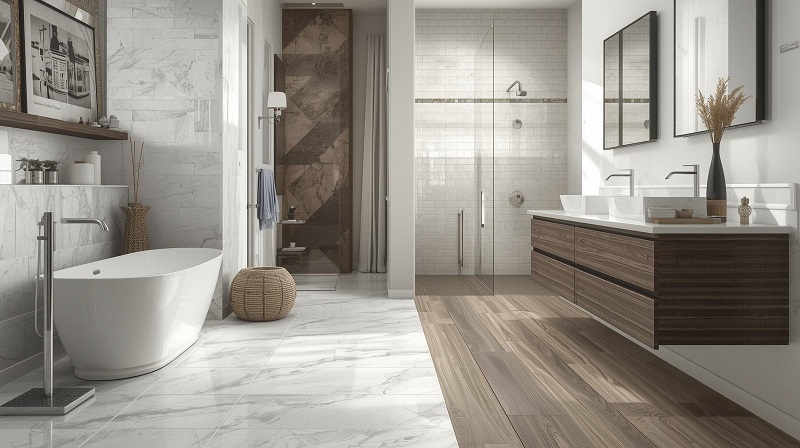
The floor of your bathroom is likely the most abused surface in your entire home. On any given day, it must withstand high humidity, direct contact with water, fluctuating temperatures, and the occasional dropped glass or heavy object. Furthermore, it needs to be safe (slip-resistant) and aesthetically pleasing to complement your overall design. Choosing from the many best bathroom flooring options is a decision where form must strictly follow function.
At Bathroom Pro, we have seen how the right flooring can transform a cold, dated space into a warm, modern sanctuary. Conversely, the wrong choice can lead to mold issues, slippery hazards, and a floor that looks worn out after only a few years. In this comprehensive guide, we will analyze the top-tier materials available in 2026, comparing their lifespan, maintenance requirements, and how they impact your bathroom remodel cost.
1. Tile Flooring: The Undisputed Champion
Tile has remained the most popular choice for decades, and for good reason. It is incredibly durable, water-resistant, and offers an infinite variety of design possibilities. However, not all tiles are created equal.
Porcelain Tile vs. Ceramic
This is the most common question we get at Bathroom Pro. While they look similar, porcelain is the superior choice for bathroom environments.
- Porcelain: Fired at much higher temperatures and made from denser clay, porcelain has a water absorption rate of less than 0.5%. It is nearly waterproof and highly resistant to cracks and chips.
- Ceramic: Slightly more porous and less dense. While it is more budget-friendly, it can absorb more moisture over time if the glaze is compromised.
The «Wood-Look» Tile Trend
For homeowners who love the warmth of hardwood but know that real wood and bathrooms don’t mix, wood-look porcelain tile is the answer. These tiles feature high-definition inkjet printing that replicates the grain and texture of real timber, providing a cozy aesthetic with the waterproof benefits of porcelain.
PEI Ratings: What You Need to Know
When selecting tile, our experts check the PEI (Porcelain Enamel Institute) rating. For bathroom floors, you want a PEI rating of 3 or higher, ensuring the tile can handle foot traffic without losing its finish or structural integrity.
2. Vinyl Flooring: The Modern Disruptor
In recent years, Luxury Vinyl Plank (LVP) and Luxury Vinyl Tile (LVT) have become some of the best bathroom flooring options for those seeking comfort and value.
Why Vinyl Is Surging in Popularity
Modern vinyl is no longer the thin, peeling sheets of the 1970s. Today’s LVP is a multi-layered product featuring a 100% waterproof core (typically SPC or Stone Plastic Composite).
- Warmth and Comfort: Unlike tile, which can feel freezing underfoot, vinyl retains heat and is softer to walk on.
- Ease of Installation: Many vinyl products use a «click-lock» system, which can reduce labor costs during your bathroom remodeling project.
- Realism: High-end LVT can mimic the look of slate, marble, or travertine so effectively that it is difficult to distinguish from natural stone.
The Importance of the Wear Layer
The durability of vinyl depends on its «wear layer»—the transparent top coating. At Bathroom Pro, we only recommend vinyl with a wear layer of 20 mils or higher for bathroom environments to ensure it stands up to heavy use and cleaning chemicals.
3. Stone Flooring: The Ultimate Luxury
If your goal is to create a high-end, «home spa» retreat, natural stone is the premier choice. It offers a level of prestige and unique beauty that no manufactured product can replicate.
Popular Stone Choices
- Marble: The classic choice for luxury. It features stunning veining but is naturally porous and requires regular sealing to prevent staining.
- Slate: Naturally slip-resistant due to its textured surface. It is incredibly durable and holds heat well, making it a favorite for rustic or modern-organic designs.
- Granite: One of the hardest stones available. It is less porous than marble and highly resistant to scratches.
The High-Maintenance Trade-Off
While stone is beautiful, it requires more care. Natural stone must be professionally sealed upon installation and resealed every 1-2 years. Without proper sealing, water can penetrate the stone, causing discoloration or even cracking over time.
4. Waterproof Options and Innovations for 2026
As technology advances, new waterproof flooring materials are entering the market, giving homeowners more choices than ever.
Stone Plastic Composite (SPC)
SPC is a type of rigid core vinyl that is becoming a top recommendation at Bathroom Pro. The core is made of limestone powder and stabilizers, making it incredibly stable. It won’t expand or contract even when the bathroom gets steaming hot during a shower.
Waterproof Laminate
Traditionally, laminate was forbidden in bathrooms. However, manufacturers have developed «waterproof laminate» with advanced locking joints and hydrophobic coatings. While still less resilient than tile or LVP, it is a viable option for powder rooms or half-baths where standing water is less common.
Selection Criteria: How to Choose the Right Floor
With so many best bathroom flooring options, how do you decide? At Bathroom Pro, we use the following four pillars to guide our clients:
1. Water Resistance and Slip Resistance
In a bathroom, safety is paramount. We look at the COF (Coefficient of Friction) rating. For bathroom floors, you want a slip-resistant finish, especially in the «wet areas» near the shower and tub. Honed or matte finishes are generally safer than polished, high-gloss surfaces.
2. Maintenance and Longevity
How much time do you want to spend cleaning? Porcelain and vinyl are «low maintenance»—a simple sweep and mop are enough. Natural stone and small tiles with extensive grout lines require more scrubbing and periodic sealing.
3. Radiant Heat Compatibility
If you live in a cold climate, consider adding a radiant heating system underneath your floor. Tile and stone are excellent conductors of heat and will turn your bathroom floor into a warm, inviting surface. Vinyl is also compatible with most modern low-temp heating mats.
4. Budget Realities
Your flooring choice significantly impacts the total bathroom remodel cost.
- Budget ($): Standard ceramic tile or vinyl plank.
- Mid-Range (
- ): Porcelain tile or premium LVP.
- Luxury (
- $): Natural stone or large-format porcelain slabs.
The Bathroom Pro Installation Secret: Subfloor Preparation
No matter how beautiful or expensive your flooring is, it will fail if the subfloor is not prepared correctly. In the bathroom remodeling world, the floor you don’t see is just as important as the one you do.
At Bathroom Pro, our installation process includes:
- Leveling: We ensure the subfloor is perfectly flat to prevent «lippage» (uneven tile edges) or «bouncing» in vinyl floors.
- Anti-Fracture Membranes: For tile installations, we use uncoupling membranes (like Ditra) that prevent the tiles from cracking as your house naturally settles.
- Moisture Barriers: We install high-quality underlayments to ensure that even if a leak occurs, the water won’t reach your home’s structural joists.
Conclusion
Finding the best bathroom flooring options for your home involves balancing your personal style with the practical needs of a high-moisture environment. Porcelain remains the king of durability, vinyl offers unbeatable value and warmth, and natural stone provides a luxury experience that elevates the entire home.
At Bathroom Pro, we believe that a great bathroom floor should last for decades. By choosing high-quality materials and ensuring a professional, waterproof installation, you are not just decorating a room—you are protecting your home and enhancing your daily life.
Ready to Step Onto Your New Floor?
Choosing the right material is a big decision, but you don’t have to make it alone. Our design experts at Bathroom Pro are ready to bring samples to your home, explain the technical differences, and provide a transparent quote for your project.
Contact Bathroom Pro today to schedule your free flooring consultation and request a quote