
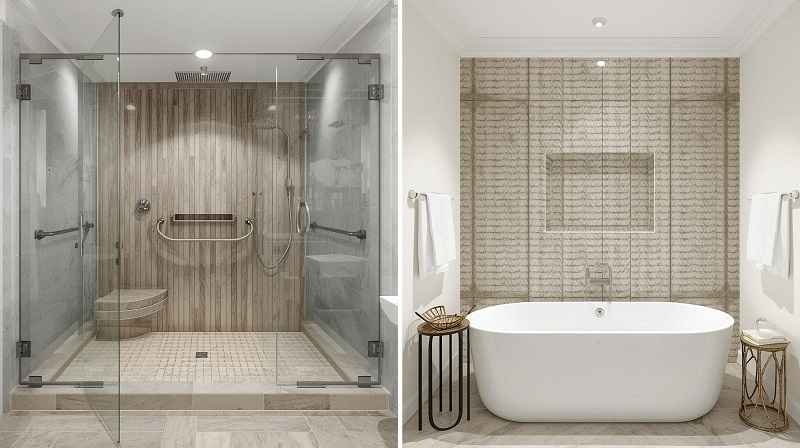
One of the most debated topics in the world of home renovation is the classic showdown: walk in shower vs tub. When you begin the journey of bathroom remodeling, you will inevitably reach a point where you must decide how to utilize your square footage. Should you keep the traditional bathtub, or is it time to embrace the modern, airy feel of a walk-in shower?
At Bathroom Pro, we’ve guided thousands of homeowners through this exact dilemma. The truth is that there is no universal «right» answer. The best choice depends on your current lifestyle, your future plans for the home, and the specific constraints of your bathroom’s layout. In this comprehensive guide, we will analyze the pros and cons of each, compare the costs of walk-in shower installation, and look at how this decision impacts your home’s resale value.
Pros and Cons of Each Option
To make an informed decision in the walk in shower vs tub debate, you must understand the daily reality of living with each fixture.
Walk-In Showers: The Modern Standard
A walk-in shower is a shower space that is free of curtains and high barriers. They often feature glass doors or a completely open «wet room» design.
Pros:
- Accessibility and Safety: This is the primary advantage. Walk-in showers, especially curbless versions, are much safer for seniors or individuals with mobility issues. There is no high ledge to trip over.
- Aesthetic Appeal: They make a bathroom look significantly larger and more high-end. The continuous sightline of the tile through the glass creates a «spa-like» atmosphere.
- Efficiency: For most busy professionals, a quick, powerful shower is more practical for a daily routine than a 30-minute soak.
- Customization: You can add multiple showerheads, steam features, built-in benches, and recessed niches for a truly personalized experience.
Cons:
- Cost: Because they require extensive waterproofing and tile work, a high-quality walk-in shower can be more expensive than a standard tub.
- Heat Retention: Open showers can feel draftier than a closed tub/shower combo.
- Not Ideal for Small Children: It is much more difficult to bathe a toddler in a walk-in shower.
Bathtubs: The Classic Retreat
Whether it’s a standard alcove tub or a luxurious freestanding soaking tub, the bathtub has remained a staple of American homes for over a century.
Pros:
- Relaxation and Wellness: There is no substitute for a warm soak after a long day. Many modern tubs feature hydrotherapy jets or air-baths for muscle recovery.
- Essential for Families: If you have young children, a bathtub is a non-negotiable tool for the nightly routine.
- Versatility: A tub/shower combo gives you the option of both, making it a functional choice for a secondary or guest bathroom.
Cons:
- Safety Hazards: Stepping over a 15 to 20-inch porcelain ledge can be dangerous for people with balance issues.
- Space Consumption: Tubs have a large, fixed footprint that can make a small bathroom feel cramped.
- Water Usage: Filling a large soaking tub uses significantly more water than a 10-minute shower with a low-flow showerhead.
Cost Comparison: Installation and Materials
Budget is a major factor in the walk in shower vs tub decision. While prices vary by region, here is how the costs typically break down in 2026.
- Bathtub Installation: A basic alcove tub replacement is generally the more affordable option. You can purchase a quality tub for $500 – $1,500, with labor adding another $1,000 – $2,500. However, if you opt for a high-end freestanding tub, the costs can easily rise to $5,000+ once you factor in the specialized plumbing required for a floor-mounted filler.
- Walk-In Shower Installation: A professional walk-in shower is almost always a more expensive undertaking. This is because it involves:
- Demolition: Removing the old tub and subfloor.
- Waterproofing: Applying a high-tech membrane (like Schluter-Kerdi) to ensure zero leaks.
- Tile Work: Labor-intensive custom tiling on both the floor and walls.
- Glass Work: Custom-cut tempered glass panels or doors.
- Total Cost: A mid-range walk-in shower usually starts at $6,000 and can go up to $15,000 for a luxury master suite.
- At Bathroom Pro, we emphasize that while the initial cost of a shower is higher, the «value-added» to your daily life and the modern appeal often justify the investment.
Space Considerations: Maximizing Your Layout
The footprint of your bathroom often dictates the winner of the walk in shower vs tub battle.
A standard bathtub takes up about 15 square feet (5ft x 3ft). In a small bathroom, this «block» of porcelain can swallow the room. By converting to a walk-in shower, you can use the same 15 square feet, but because the floor is visible and the glass is clear, the room feels double its actual size.
However, if you have a massive master bathroom, a walk-in shower alone might leave the space feeling empty. This is where the «Luxury Hybrid» layout comes in. At Bathroom Pro, we often design master suites that feature a large walk-in shower and a separate freestanding tub. This provides the best of both worlds—if your budget and square footage allow.
Resale Value: The «One Tub» Rule
Many homeowners worry that removing a bathtub will hurt their home’s resale value. In the real estate industry, there is a traditional «rule» that every home should have at least one bathtub to appeal to families with children.
Here is the Bathroom Pro expert take on resale:
- Secondary Bathrooms: If you only have one full bathroom in the house, keep the tub. Future buyers with kids will consider a tub-less house a dealbreaker.
- Master Bathrooms: In 2026, the trend has shifted. Many modern buyers prefer a massive, high-end walk-in shower in the master suite over a cramped tub/shower combo. As long as there is another bathroom in the house with a tub, removing the master tub usually increases the home’s appeal to the majority of buyers.
Making the Final Decision
So, which one should you choose? Ask yourself these four questions:
- Who is using the bathroom? If it’s for an elderly parent, go with the walk-in shower. If it’s for a young family, keep the tub.
- How often do you actually take a bath? Be honest. If you haven’t taken a bath in three years, you are wasting valuable space on a «dust collector.»
- What is the goal of the remodel? If you want to create a high-end, spa-like master retreat, a curbless walk-in shower is the clear winner.
- Is this your «forever home»? If you plan on aging in your home, a walk-in shower is a smart investment in your future safety and independence.
Conclusion
The walk in shower vs tub debate doesn’t have a loser. Both options offer unique benefits that can enhance your home. The key is to choose the fixture that serves your actual daily needs rather than a hypothetical future use.
If you prioritize safety, modern aesthetics, and efficiency, a walk-in shower is a transformative choice. If you value tradition, have small children, or find deep relaxation in a warm soak, a bathtub remains a worthy centerpiece.
Expert Installation with Bathroom Pro
Regardless of your choice, the quality of the installation is what ensures your bathroom remains beautiful and leak-free for decades. At Bathroom Pro, we specialize in both high-end tub replacements and precision walk-in shower installation. Our team handles everything from the complex plumbing to the delicate tile work, ensuring your vision is executed perfectly.